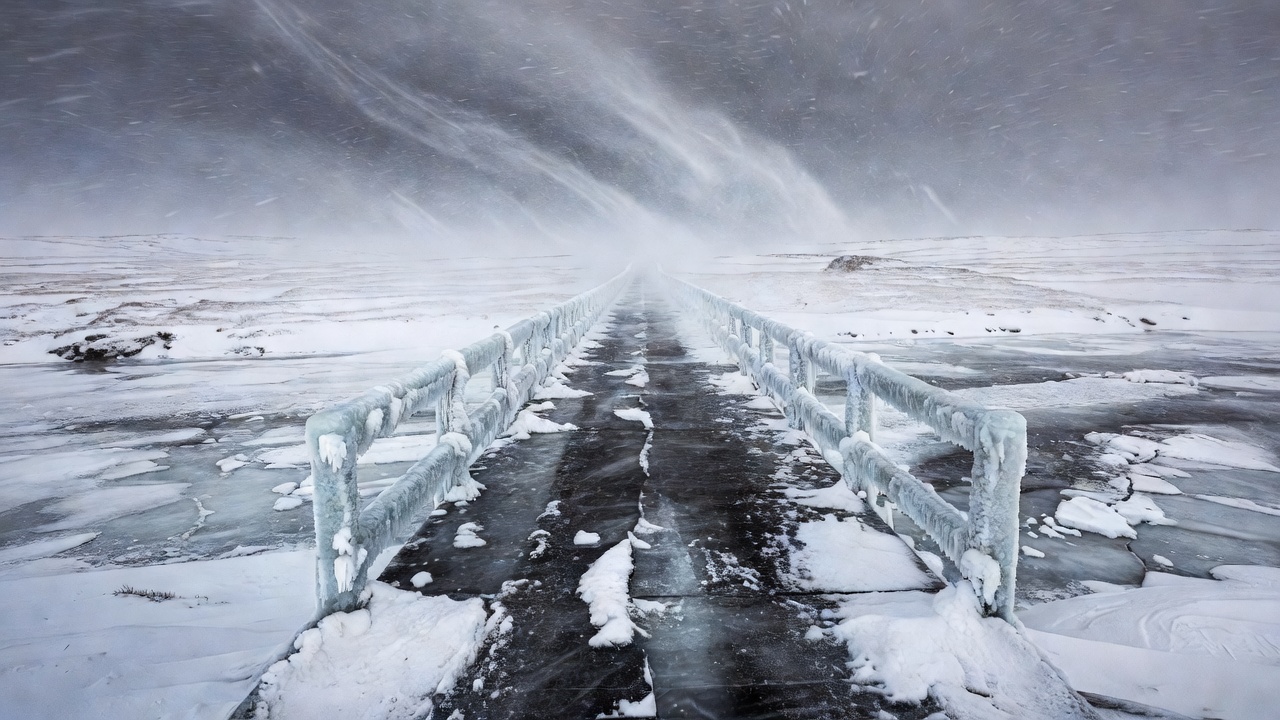
The sheer geographical topography of Iceland introduces road engineering features rarely encountered in continental jurisdictions. Raised gravel embankments without guardrails, unlit wooden single-lane bridges (*Einbreið brú*), and sudden elevation changes like blind crests (*Blindhæð*) demand muscle memory and defensive precision.
1. The Physics and Countermeasures of Black Ice (Svakís)
Black ice in Iceland is transparent frozen moisture forming over black volcanic asphalt. It frequently occurs when air temperature hovers near 0°C to +2°C while the roadbed itself remains at -2°C due to ground permafrost.
If the vehicle begins to oversteer (tail sliding out): DO NOT slam on the brakes. Even modern ABS systems lengthen slide trajectories on frictionless wet ice. Depress the clutch or shift automatic transmission smoothly to Neutral (N) to cut engine braking torque. Steer gently into the skid without sudden jerk motions. Once traction returns, gently resume Drive and ease onto the throttle.
2. Single-Lane Bridges (Einbreið Brú)
Dozens of bridges on Route 1 across the South Coast and East Fjords accommodate only a single vehicle at a time. Many feature timber running planks with zero friction when wet with glacial meltwater or ice.
- Right of Way Rule: The vehicle closest to the bridge mouth has priority. However, in winter, always assume oncoming trucks cannot stop. Slow down to 30 km/h well in advance.
- Bridge Deck Freeze: Air flows beneath the bridge deck, chilling it much faster than the surrounding road. Bridges freeze first. Never accelerate or brake while tires are directly on the bridge planks. Coast smoothly across.
- Headlight Warning: At night, flash high beams once before approach to confirm priority and illuminate icy handrails.
3. Blind Crests (Blindhæð)
Icelandic rural highways frequently crest sharply over glacial moraines without warning curves. An approaching vehicle in the opposing lane cannot be seen until both cars reach the peak.
- Keep Right: Hug the right side of the road before the apex. Never straddle the centerline to avoid roadside snowbanks.
- Zero Passing Zone: Overtaking near a Blindhæð sign is strictly illegal under Icelandic traffic code and carries severe fines.
- Speed Reduction: Ease off the accelerator before the crest to prevent front suspension unloading, which reduces front tyre steer authority on ice.
4. Katabatic Jet Streams Beneath Mountains
Specific stretches of Route 1 are notorious for katabatic downdrafts—cold air cascading down glacier tongues and accelerating down cliff faces:
- Under Eyjafjöll & Reynisfjall (Vík): Wind gusts can easily reach 40 m/s even when the wider forecast predicts moderate breezes.
- Hamarsfjörður (East Fjords): Violent offshore gales spray saltwater and sea foam across the highway, causing sudden blinding smears on windshields. Keep wiper fluid topped with pure -35°C concentrated alcohol wash; standard summer detergent will freeze instantly on your glass.