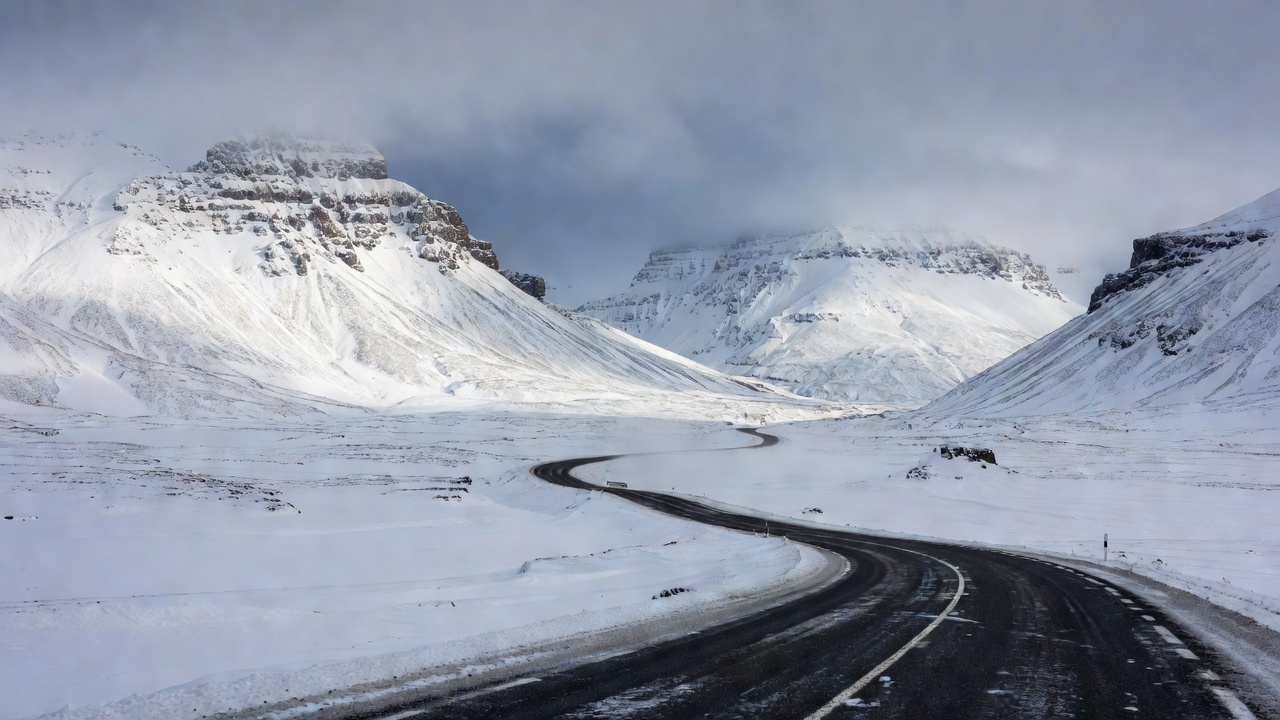
Summer tourists circle Iceland's 1,322 km Ring Road in 5 to 7 days with 22 hours of perpetual daylight. Attempting that same timeline in winter without rigorous calibration will strand you in an unplowed mountain pass after nightfall. In December and January, civil twilight spans merely 11:00 AM to 3:30 PM.
The Golden Rules of Winter Pacing
Cap daily driving targets at 180 to 220 km maximum. Plan your itinerary so you reach your evening destination before 4:00 PM. Night driving on unlit basalt highways during active blizzards introduces sensory deprivation and disorienting whiteouts.
Depart Reykjavík eastward via Hellisheiði pass. Pass the waterfalls Seljalandsfoss and Skógafoss. Arrive in Vík before darkness descends across the black basalt beaches of Reynisfjara.
Traverse the vast outwash plain of Skeiðarársandur beneath Vatnajökull ice cap. Visit Jökulsárlón glacier lagoon and Diamond Beach. Continue onward to the fishing port of Höfn.
Navigate the dramatic fjord edges of Berufjörður and Breiðdalsvík. DO NOT take shortcut gravel mountain pass Öxi (Road 939) or Breiðdalsheiði; both are generally impassable (*ófært*) in winter. Stick strictly to paved coastal Route 1.
Ascend the high desert highland plateau of Möðrudalsöræfi. This is one of the coldest, most isolated paved segments in Europe. Refuel completely in Egilsstaðir before climbing. End day in geothermal Mývatn basin.
Short daylight transfer via Goðafoss waterfall. Use Vaðlaheiðargöng toll tunnel to bypass the hazardous Víkurskarð mountain pass if icy blizzards threaten North Iceland. Overnight in Akureyri.
Long trek through Northwest valleys (Skagafjörður) and over the notorious Holtavörðuheiði mountain plateau into West Iceland. Stop in Borgarnes for fuel and provisions.
Smooth transit south through the Hvalfjörður sub-sea tunnel into the capital area. Buffer at least 4 hours before any international flight at KEF for rental vehicle check-in inspections.